Article Content
Rats can become a serious pest problem when they find reliable access to food, water and shelter. They can enter buildings through surprisingly small openings, remain hidden for long periods and become difficult to manage when the conditions around a property continue to support them.
For Sydney homeowners, rat activity can be particularly frustrating because rodents may move through roof spaces, wall cavities, garages, kitchens, gardens and other areas without being seen regularly.
The first sign is not always seeing a rat.
You may instead notice scratching sounds at night, droppings, gnaw marks, damaged food packaging, unusual smells or signs that something has been moving around hidden areas of the property.
Understanding why rats enter a property, where they hide, what signs to look for and how to reduce the conditions that attract them is an important part of effective rodent management.
Why Do Rats Enter Homes?
Rats are constantly looking for suitable sources of food, water and shelter.
A property can provide all three.
Food may come from poorly stored groceries, rubbish, pet food, outdoor food waste or small amounts of food left accessible overnight.
Water can come from leaking plumbing, damp areas, outdoor sources and other moisture around the property.
Shelter may be available in roof spaces, wall cavities, garages, sheds, cluttered storage areas, gardens and gaps around buildings.
Common conditions that can attract or support rat activity include:
Accessible food
Unsealed rubbish bins
Pet food left outside
Food scraps and waste
Compost that is not properly managed
Bird or animal feed
Leaking taps or pipes
Damp areas around the property
Overgrown vegetation
Cluttered storage areas
Garden waste
Firewood stored close to buildings
Gaps around doors and walls
Openings around pipes and cables
Roof and ceiling access points
A clean home can still experience rat activity.
Good hygiene helps, but rats can also enter because of building access points, surrounding vegetation, neighbouring properties or environmental conditions.
How Do Rats Get Inside a House?
One of the biggest mistakes homeowners make is focusing only on where they saw the rat.
The more important question is often:
How did it get inside?
Rats can take advantage of gaps and openings around a property.
Potential entry points include:
Gaps around pipes
Openings around electrical cables
Damaged vents
Gaps under doors
Broken screens
Roof openings
Damaged roofing materials
Gaps around windows
Wall penetrations
Garage doors that do not seal properly
Openings around plumbing
Gaps between structures
Even if rats are removed, the problem may return if the access point remains available.
This is why long-term rodent management should consider both the existing activity and the conditions allowing rats to access the property.
Where Do Rats Hide?
Rats are highly adaptable and can use many different areas around a property for shelter.
Inside a home, possible hiding areas include:
Roof cavities
Ceiling spaces
Wall cavities
Behind appliances
Under cupboards
Inside storage areas
Behind furniture
Garages
Sheds
Roof spaces
Areas behind walls
Under floors
Outside, rats may shelter around:
Garden sheds
Wood piles
Dense vegetation
Compost areas
Outdoor storage
Drainage areas
Rubbish storage
Garden structures
Building foundations
Areas containing accumulated materials
If activity is repeatedly noticed around one part of the property, that area may deserve closer inspection.
Signs You May Have a Rat Problem
You do not always need to see a rat to know that rodent activity may be present.
Several signs can indicate that further investigation is worthwhile.
Scratching or Movement Sounds
One of the most common signs is hearing scratching, movement or gnawing sounds, particularly during quieter periods.
Sounds coming from ceilings, walls or roof spaces may indicate animal activity.
However, noises can have several possible causes, so sound alone cannot confirm that rats are present.
Rat Droppings
Droppings are another common indication of rodent activity.
They may be found around:
Food storage areas
Kitchen cupboards
Garages
Roof spaces
Storage areas
Along walls
Behind appliances
Areas where food is accessible
Finding repeated fresh droppings can be a reason to investigate further.
Gnaw Marks
Rats have continuously growing incisors and may gnaw on various materials.
Possible signs include damage to:
Food packaging
Cardboard
Wood
Plastic
Cables
Stored materials
Other accessible objects
Not every gnaw mark is caused by rats, but unexplained repeated damage can be worth investigating.
Damaged Food Packaging
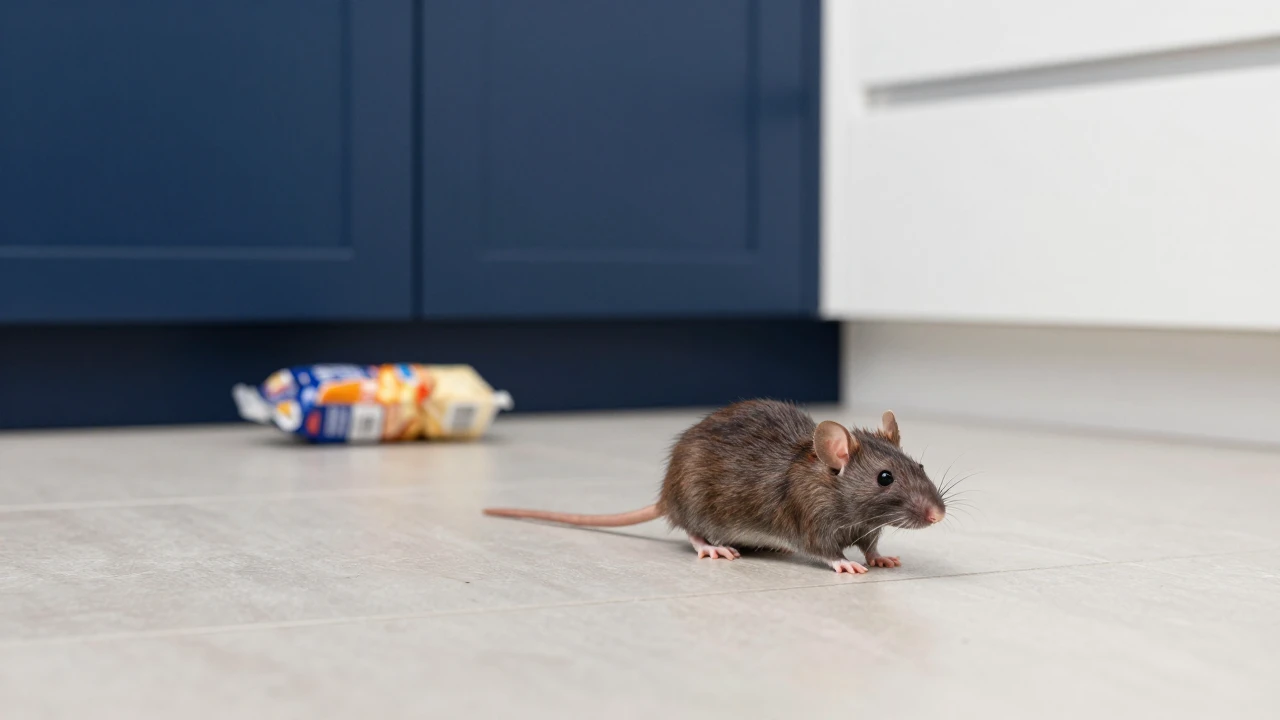
If food packets appear to have been opened, chewed or damaged, check the surrounding area carefully.
Food should be stored in suitable sealed containers, particularly when there are signs of rodent activity.
Unusual Smells
Rodent activity can sometimes be associated with unusual smells, particularly in enclosed or poorly ventilated areas.
An unexplained persistent smell around a ceiling, wall or storage area may justify further investigation.
Greasy Marks Along Surfaces
Rats can leave marks as they repeatedly travel along walls or other surfaces.
These marks may appear around frequently used routes, although their presence alone cannot confirm an infestation.
Why Are Rats More Active at Night?
Rats are generally more active during the night and quieter periods.
This means homeowners may hear movement or notice other signs after dark even when there is little visible activity during the day.
However, daytime rat sightings should not automatically be interpreted as proof of a severe infestation.
Rat behaviour can vary depending on:
Food availability
Disturbance
Population pressure
Shelter
Environmental conditions
The individual animal
The overall pattern of signs is more useful than relying on a single observation.
How Can You Prevent Rats?
Rat prevention starts with making the property less attractive and reducing opportunities for rodents to enter.
There is no single prevention method that guarantees a property will never experience rat activity.
Instead, focus on several areas at the same time.
1. Store Food Securely
Food should be stored in suitable sealed containers.
Avoid leaving open food packets, leftovers or other accessible food sources around kitchens and storage areas.
Clean spills and crumbs promptly.
Particular attention should be given to areas where food is prepared or stored.
2. Manage Household Rubbish
Rubbish can provide an easily accessible food source.
Use bins with secure lids and avoid allowing waste to accumulate unnecessarily.
Where possible:
Keep rubbish containers closed
Clean spills around bins
Avoid leaving food waste exposed
Dispose of waste regularly
Keep outdoor rubbish areas organised
3. Be Careful With Pet Food
Pet food can attract rodents when left accessible for extended periods.
Avoid leaving food bowls outside overnight where practical.
Store pet food securely and clean up spills.
4. Maintain Your Garden
Outdoor conditions can influence rodent activity around a property.
Keep vegetation reasonably maintained and avoid creating dense areas of shelter directly against buildings.
Pay attention to:
Overgrown plants
Garden waste
Dense ground cover
Fallen fruit
Stored materials
Compost areas
Wood piles
The goal is not to remove every plant around the property.
Instead, maintain the area so potential rodent activity is easier to identify and access points remain visible.
5. Store Firewood Carefully
Firewood and other stored materials can create sheltered spaces for rodents.
Where practical, keep firewood organised and away from direct contact with the building.
Avoid creating large, undisturbed piles directly against external walls.
6. Seal Suitable Entry Points
Inspect the property for gaps and openings.
Pay particular attention to:
Pipe penetrations
Cable entry points
Doors
Windows
Roof areas
Vents
Garage doors
Wall openings
Plumbing access points
Suitable repairs and sealing can reduce opportunities for rodents to enter.
Can Rats Enter Through Small Gaps?
Yes, rodents can make use of relatively small openings.
This is why inspecting the entire building envelope can be important when dealing with recurring rodent activity.
A gap that looks insignificant to a homeowner may still provide an opportunity for a rodent to access a protected part of the property.
Instead of sealing only the area where a rat was seen, consider looking for other possible entry points around the building.
What Should You Do If You See a Rat?
Seeing a rat can be alarming, but immediately chasing or disturbing it may not solve the underlying problem.
Start by observing where the animal was seen.
Ask yourself:
Was it inside or outside?
Was it near food?
Was it near rubbish?
Was it close to vegetation?
Was it near a garage or shed?
Was there an obvious entry point nearby?
Have you noticed droppings or other signs?
Then inspect the surrounding area for possible food sources, shelter and access points.
If sightings continue, professional pest advice can help determine what may be happening.
Are DIY Rat Traps Enough?
Traps can sometimes be useful as part of rodent management, but simply placing a trap where a rat was seen does not necessarily address the wider problem.
The important questions include:
How many rodents may be present?
Where are they entering?
Where are they travelling?
Where are they sheltering?
What food sources are available?
Is there continued access to the property?
Are there signs of activity in concealed areas?
If the conditions supporting rodent activity remain unchanged, the problem may continue.
For persistent activity, a broader assessment may be more appropriate than relying on a single trap.
Why Do Rats Keep Coming Back?
Recurring rat activity usually means that something is allowing the problem to continue.
Possible contributing factors include:
Accessible food
Outdoor rubbish
Pet food
Garden shelter
Structural gaps
Roof access
Nearby rodent activity
Moisture
Stored materials
Connected buildings
Unresolved entry points
Removing one rat does not necessarily remove the reason that rats are attracted to the property.
This is why effective pest management should look beyond the animal itself and consider the conditions around the property.
When Should You Consider Professional Rat Control?
Professional pest control may be worth considering when rat activity is persistent, recurring or difficult to locate.
Consider professional advice if:
You regularly see rats
You repeatedly hear movement in ceilings or walls
You are finding droppings
Food packaging is being damaged
You notice repeated gnaw marks
Rats are appearing in multiple areas
DIY measures have not solved the problem
You cannot identify where rats are entering
The activity keeps returning
You suspect rats are accessing roof or wall cavities
You are concerned about possible property contamination
A professional assessment can help identify potential sources of activity and determine an appropriate management approach.
What Happens During Professional Rat Control?
Professional rodent management should begin with understanding the property and the pattern of activity.
Depending on the situation, a pest professional may assess:
Areas where rats have been seen
Dropping locations
Possible entry points
Roof and ceiling access
Food sources
Rubbish areas
Garden conditions
Storage areas
Signs of gnawing
Potential harbourage areas
Other conditions that may support rodent activity
The treatment approach depends on the property, the level of activity and the circumstances involved.
Property owners may also receive recommendations about:
Food storage
Rubbish management
Entry-point sealing
Garden maintenance
Storage
Moisture management
Ongoing monitoring
Rat Control for Sydney Homes
Rat problems can occur across many different types of Sydney properties.
These can include:
Houses
Townhouses
Apartments
Garages
Sheds
Offices
Shops
Warehouses
Restaurants
Other commercial properties
The appropriate approach can vary significantly between properties.
A standalone house may have roof and garden access points, while an apartment may have shared walls, service areas or other access routes.
Commercial properties can also have different food storage, waste management and operational requirements.
For this reason, rodent management should be based on the actual property and the specific pattern of activity.
Rats and Food Safety
Rodents can create hygiene concerns when they gain access to food preparation or storage areas.
If rodent activity is suspected around food, take the situation seriously.
Keep food properly sealed and clean affected surfaces appropriately.
Businesses handling food may have additional hygiene and operational requirements, making professional pest management particularly important when rodent activity is suspected.
How Long Does Rat Control Take?
There is no single timeframe that applies to every rat problem.
The time required can depend on:
The level of activity
The size of the property
Where rodents are hiding
How they are accessing the property
Available food and shelter
Whether entry points can be addressed
The type of management approach being used
Whether activity is coming from surrounding properties
A professional should assess the situation before making specific claims about how quickly the problem will be resolved.
Can a Clean Home Still Have Rats?
Absolutely.
Keeping a property clean can reduce available food sources, but cleanliness alone cannot guarantee that rodents will never enter.
Rats can gain access because of:
Structural openings
Roof access
Outdoor conditions
Nearby properties
Garden areas
Rubbish
Environmental conditions
This is why effective prevention combines hygiene, property maintenance, access-point management and awareness of rodent activity.
Final Thoughts
Rats are much easier to manage when the conditions supporting their activity are identified early.
Keeping food secure, managing rubbish, maintaining gardens, reducing outdoor shelter and sealing suitable entry points can all help reduce the likelihood of rodent problems.
However, prevention cannot guarantee that rats will never appear.
If you are repeatedly seeing rats, hearing movement in your roof or walls, finding droppings or noticing unexplained damage, it is worth investigating the situation rather than simply treating the visible sign.
The goal should not only be to remove the rat you can see.
The bigger goal is to understand why the rat is there, how it gained access and what can be done to reduce the chance of the problem continuing.
Need Help With Rat Activity?
GR Pest Control provides professional pest management for homes and businesses across Western Sydney.
If you are dealing with recurring rat activity, unexplained rodent signs or possible access into your property, request a free quote to discuss your property and the right next step.